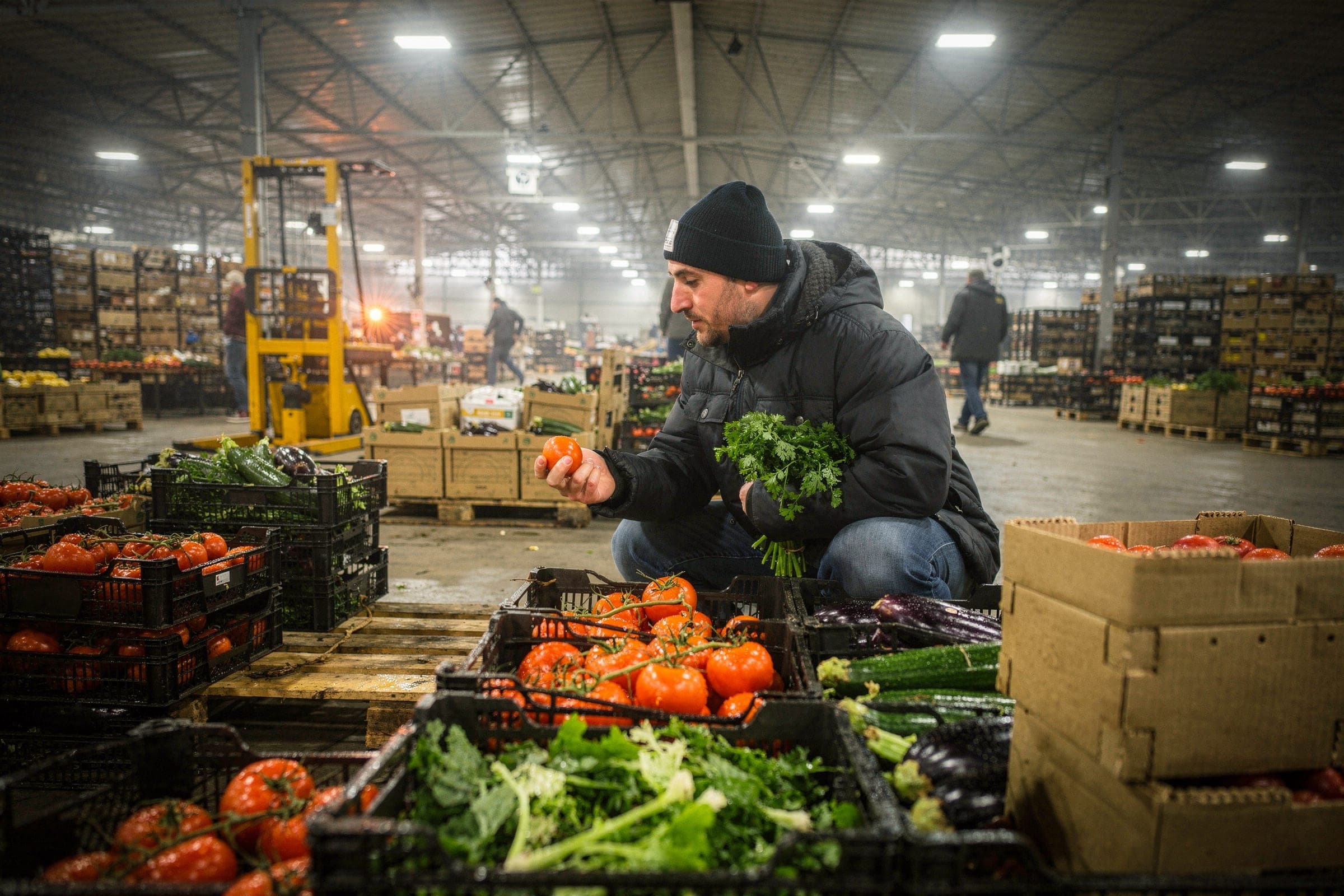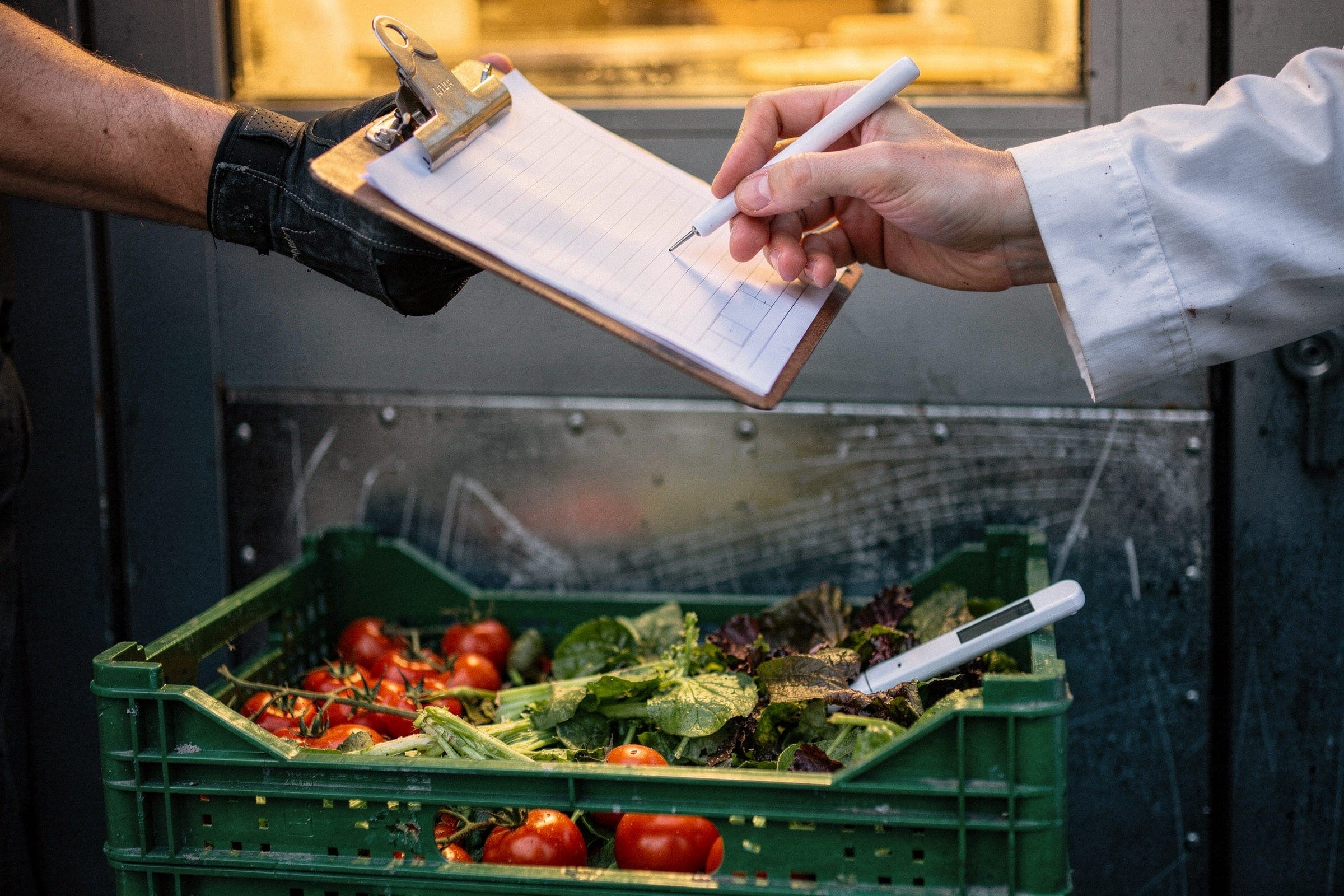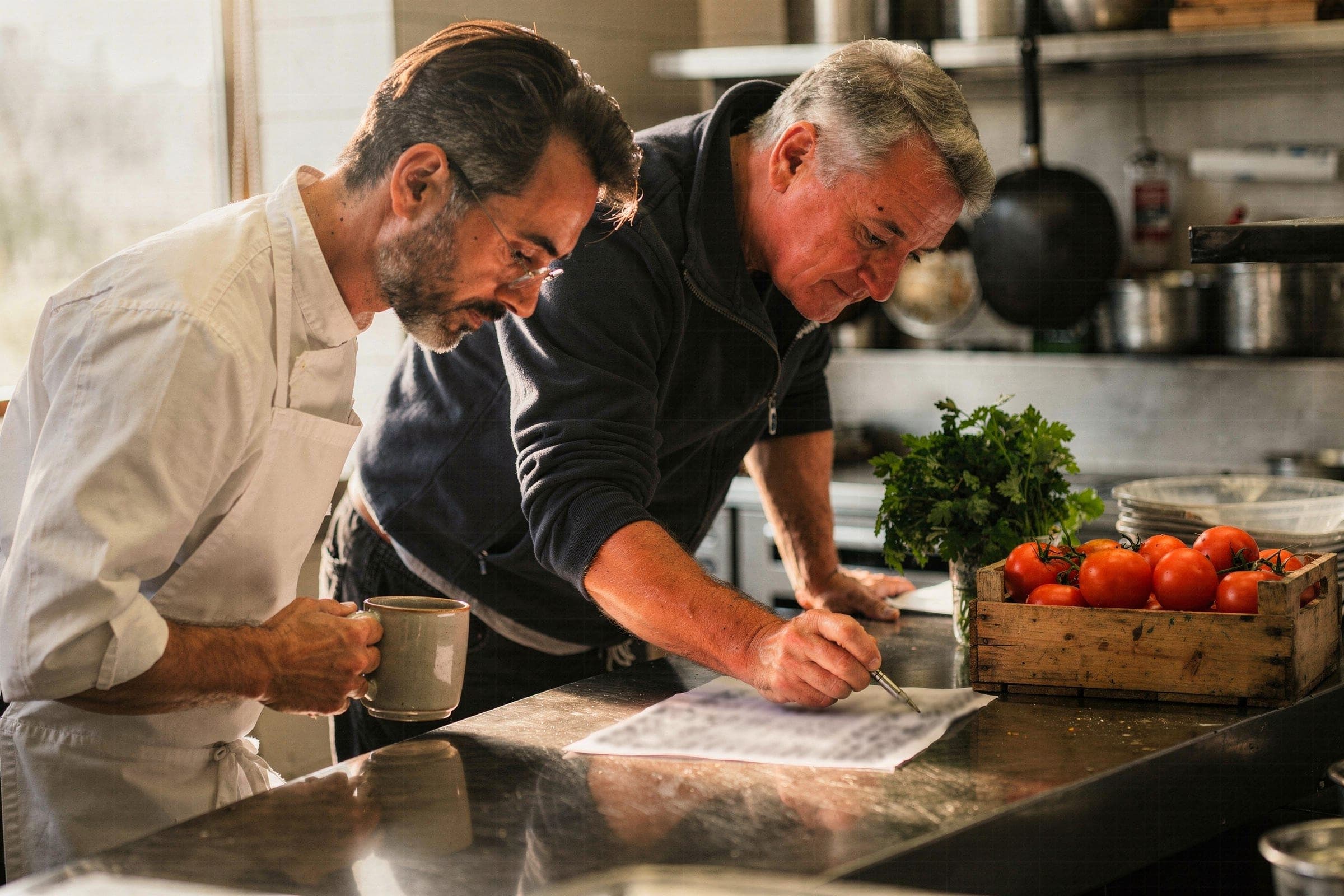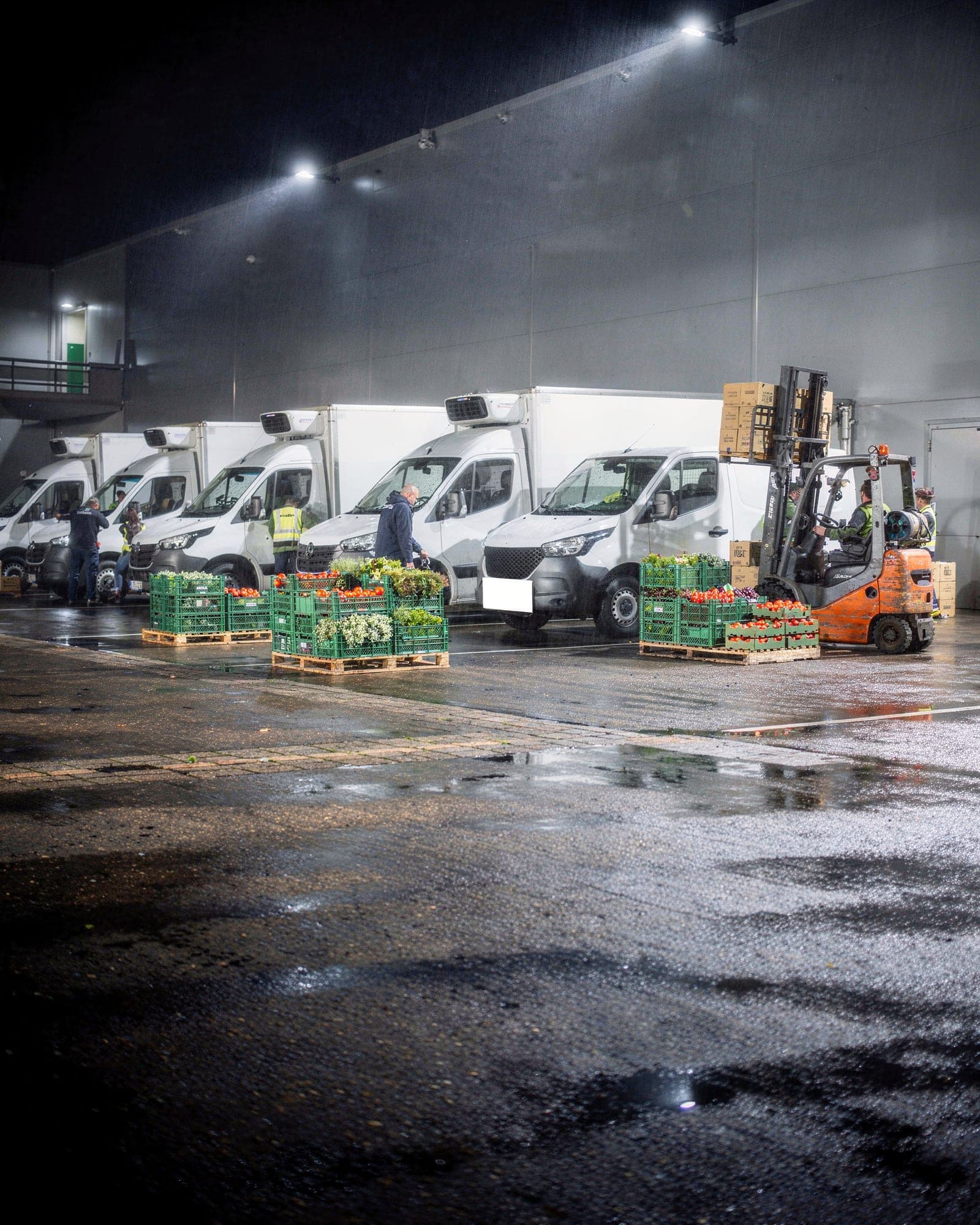
London produce supply for restaurants that cannot miss service.
One approved list for every site. Order by 23:00. On the pass 02:00–06:00, with proof and invoices that match.
Produce Network is a London produce supplier for restaurant groups of 2 to 20 sites, plus hotels, catering operations, chef-led kitchens and franchise groups. Order from one approved list by 23:00; the order is picked overnight and delivered between 02:00 and 06:00, before service, with an invoice that already matches — one record for order, proof, credit and statement, built to remove the variance and supplier sprawl across multiple kitchens.
The night run
Order tonight. On the bench before service.
- 23:00Step 1:
Order placed
Send the list after service, when the covers are known. One approved list, by app, email or a message.
- 02:00–06:00Step 2:
Picked overnight, delivered before service
Picked through the night, run to a contracted window, signed and cold-logged at the door, six nights a week.
- One recordStep 3:
Order, proof, credit and statement
The invoice already matches the order and the proof of delivery. One record, not three to reconcile.
A worked example of one night’s route. Status is shown as text, not by colour alone.
| Site | Window | Status | Detail |
|---|---|---|---|
| Mayfair | 02:00–02:40 | Delivered | 02:32 |
| Soho | 02:40–03:20 | Delivered | 03:05 |
| Fitzrovia | 03:20–04:00 | En route | arriving 03:50 |
| Shoreditch | 04:00–04:40 | Loaded | on the van |
| Clerkenwell | 04:40–05:20 | Picking | at the market |
The approved list
One spec, set once, held every night.
The approved list is the kitchen's spec written down: the product, the count, the grade, the source. It is set once with the chef and held on every order, so the same line arrives the same way at every site. Where a menu varies, the list varies with it — set, not guessed.
Set with the chef
Each line is defined to the kitchen's spec, then locked. Nothing reaches the pass that was not asked for.
Called, not swapped
If a line is short, the kitchen is called before the van loads — the swap rule is the kitchen's, never ours.
One list per site
Where the menu differs site to site, each site holds its own approved list — the same discipline, the right spec.
How it works
Three steps to a controlled supply.
Set the approved list
Agree the spec with the chef and the price for the period. The list and the price are written down before the first order.
Order by 23:00
Place the order after service against the approved list. Anything short is flagged before the van loads, not at the door.
Delivered before service
Run to a contracted 02:00 to 06:00 window, signed, cold-logged and photographed, with an invoice that already matches.
Two mornings
The same site, two suppliers.
Without one record
- Three invoices that do not reconcile against the order.
- A short at 06:00 that nobody owns by the time service starts.
- A credit chased across email for two weeks, still open.
- A tomato ripe in one kitchen, green in the next.
With one record
- One invoice that matches the order and the proof of delivery.
- A short called before the van loads, with the fix already logged.
- A credit raised against the order and applied to the statement.
- The same spec on every bench, every night.
The operating system
What changes when supply runs on one record.
Clarity
The price is agreed for the period and held. Nothing moves without a written note first.
Tracking
Every drop is GPS-tracked, signed, cold-logged and photographed at the door. The proof is in the box.
Admin
One invoice per site, consolidated to the finance director on 30-day terms. Fewer suppliers to reconcile.
Credits
No chasing. The credit finds the statement. A short is raised against the order and applied automatically.
Margin
Less waste from over-ordering, fewer write-offs from the wrong line, a food cost that holds across sites.
Controlled exceptions
When a line is short, it is more than handled.
A short is not hidden and not swapped without a call. It is logged against the order, the kitchen is told before the van loads, a credit is raised, and a new source is locked. The exception is owned, with the reason, the owner and the next action on the record.
- Short flagged before the van loads, against the order.
- Kitchen called — the swap rule is the kitchen's, never ours.
- Credit raised against the order, applied to the statement.
- A new source locked, so the same line is not short twice.
Built for
Five kinds of kitchen, one operating standard.
Restaurant groups
Two to twenty sites on one approved list, the same spec to every kitchen, one statement to the finance director.
Hotels
Banqueting volume planned ahead, SLA-grade paperwork, a contracted overnight window for each outlet.
Catering operations
Event-week volume planned in advance, a single delivery window per event, consolidated monthly invoicing.
Chef-led kitchens
A spec set with the chef and held to the line, with paperwork that matches what was ordered.
Franchise groups
The same standard across every franchised site, set once and held, with one consolidated record.
Integrations
The tills stay. The supply runs alongside.
No system to rip out, no new till to learn. Produce Network runs the supply alongside the kitchen's existing tools — orders go in by app, email or a message; invoices land in the format the finance director already uses. The change is the supply, not the software.
Delivery and access
Contracted windows, safe night access.
Each account sets safe night access — a key, a code, or a named member of staff. Every drop runs to a contracted 02:00 to 06:00 window, GPS-tracked, signed, cold-logged and photographed at the door, with a written late-delivery penalty. Produce is on the bench before the kitchen arrives.
Contracted window
A 02:00 to 06:00 window set per site, six nights a week, with a written late-delivery penalty.
Safe access
A key, a code, or a named member of staff — set per account, honoured every night.
Cold chain logged
Temperatures logged and a photo taken at the door, so the cold chain is on the record.
Switching
Change supplier without a service gap.
The new line runs beside the current supplier first, proved site by site on the kitchen's own lines, and takes over only once it has held. The incumbent is cancelled after the first matched paperwork cycle — so no site opens without produce.
Scope
A 20-minute review of sites and spec, with a price in writing before anything changes.
Run side by side
The approved list runs beside the current supplier, matched on five lines for one cycle.
Take over once held
Take over site by site, only once it has held — the incumbent notice goes after the first matched cycle.
Common questions
Questions a group operations team asks.
Produce Network is for London restaurant groups of 2 to 20 sites, plus hotels, catering operations, chef-led kitchens and franchise groups — operations that need the same spec to every site, on a contracted night window, on one consolidated record.
Order from one approved list by 23:00. The order is picked overnight and delivered between 02:00 and 06:00, before service, signed, cold-logged and photographed, with an invoice that already matches the order and the proof of delivery.
Produce defined to the kitchen's spec — the product, the count, the grade and the source written down per line on the approved list, set once with the chef and held on every order across every site.
One approved list, one delivery window per site, and one consolidated invoice — instead of three to seven suppliers per site to reconcile. The spec is set once with the chef and held, and a short is called, not swapped.
A short is logged against the order and the kitchen is called before the van loads — the swap rule is the kitchen's, never ours. A credit is raised against the order and a new source is locked, so the same line is not short twice.
Apply
Apply for a trade account.
For London groups with 2–20 sites. Apply in 8 minutes. The head of network replies in 5 working days.
Talk to a person
Direct WhatsApp and a call line for trade enquiries. Contact details are published as the account opens.
Operational claims last reviewed June 2026 · how every number is sourced